
Keynote Speakers

Speaker I: Professor, Paulo César DE MORAIS, Catholic University of Brasília & University of Brasília, Brazil
Biography:
Paulo C. DE MORAIS (H-62), PhD, was full Professor of Physics at the University of Brasilia (UnB) – Brazil up to 2013, Appointed as UnB’s Emeritus Professor (2014), Appointed as Guest Professor of Huazhong University of Science and Technology – China (2011), Visiting Professor at Huazhong University of Science and Technology (HUST) – China (2012-2015), Appointed as Distinguished Professor at Anhui University (AHU) – China (2016-2019), Appointed as Full Professor at Catholic University of Brasília (UCB) – Brazil (2018), Appointed as CNPq-1A Research Fellowship since 2010. 2007 Master Research Prize from UnB, 2008-member of the European ERA NET Nanoscience Committee, Member of the IEEE-Magnetic Society Technical Committee, Senior Member of the IEEE Society, 2012 China’s 1000 Foreign Expert Recipient, and 2012 Academic Excellence Award from Brazilian Professor’s Union. He held two-years (1987-1988) post-doc position with Bell Communications Research – New Jersey, USA and received his Doctoral degree in Solid State Physics (1986) from the Federal University of Minas Gerais – Brazil. He graduated in both Chemistry (1976) and Physics (1977) at UnB. Professor Morais is member of the Brazilian Physical Society and the Institute of Electrical and Electronics Engineers – IEEE. He has served as referee for more than 50 technical journals, takes part of the Editorial Board of more than 15 technical journals and has conducted research on nanomaterials for over 40 years. He is known for his research in preparation, characterization and applications of nanosized materials (magnetic fluid, magnetoliposome, magnetic nanoemulsion, magnetic nanocapsule, magnetic nanofilm, magnetic nanocomposite, nanosized semiconductors, polymeric dots, carbon dots, and graphene quantum dots). With more than 500 published papers in peer reviewed journals, more than 14,500 citations, more than 250 international invited talks (35 countries), and 16 filed patents. He has appeared in recent World ranking of top scientists, such as 2020-Stanford, 2022-Research.com, 2023-AD Scientific Index, 2023-Research.com, 2024-Elsevier, ONE Research Community, 2025-AD Scientific Index, 2025-Research.com, and 2025-Stanford-Elsevier.
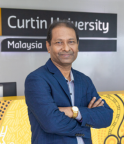
Speaker II: Professor Sujan Debnath, Department of Mechanical Engineering, Faculty of Engineering and Science Curtin University, Malaysia
Biography:
Professor Sujan Debnath is a Chartered Professional Engineer (IMechE, UK) with a Ph.D. in Mechanical Engineering and over 24 years of experience in research, teaching, consulting, and academic leadership. His expertise in bio-composites and sustainable manufacturing has earned global recognition through publications, collaborations, and inclusion in the Stanford/Elsevier Top 2% Scientist Ranking (2024-2025). He has secured multiple high-value research and consultancy grants, co-authored the book Fundamentals of Biomaterials (Springer Nature, 2023), and published over 150 indexed journal papers with 6,105+ citations and a h-index of 32 (SCOPUS). His contributions have been recognised with Curtin Malaysia’s High Impact Researcher Awards (2022–2024) and the Curtin Excellence and Innovation in Teaching Award (2023). Prof. Debnath is a Fellow of the Institute of Materials Malaysia, Adjunct Professor at Vaal University of Technology, South Africa. He actively contributes to the global research community as an editorial board member, conference organiser, and keynote speaker, and recently chaired ICMPC 2025.

Speaker III: Associate Professor Hock Jin Quah, Institute of Nano Optoelectronics Research and Technology (INOR), Universiti Sains Malaysia (USM).
Biography:
Hock Jin Quah currently serves as an Associate Professor at the Institute of Nano Optoelectronics Research and Technology (INOR), Universiti Sains Malaysia (USM). He holds a BEng (Hons), MSc, and Phd in Materials Engineering with specialization in Electronics Materials from the School of Materials and Mineral Resources Engineering, USM. His research focuses in the development of thin film technology and optimization of device performance based on high dielectric constant thin film materials as well as wide band gap semiconductors for potential applications in power electronics, solid-state lighting, gas sensors, and photodetectors. For years, he has actively involved in the growth of binary and ternary based thin film materials as the passivation layers for GaN-, SiC-, Si-, and Ge-based metal-oxide-semiconductor (MOS) capacitors. In recent times, his research areas are widened to the growth and modification of Ga2O3- and GaN-based compound semiconductors using low-cost route to study the aspects of optical performance and gas sensing behaviours. His contribution in the field of research and development is reflected through 109 international refereed top-tier publications with H-Index of 21 and 1 patent granted under MyIPO. He has also received several recognitions from the university under “Sanggar Sanjung” awards for year 2008, 2010 to 2016, and 2018 to 2024 as well as the “Best Thesis Award for Category of CRI: Engineering and Technology” for the year 2014. In Year 2024, he was honored with the “2024 Talented Young Scientist Program (TYSP)” award by the Ministry of Science and Technology of the People’s Republic of China. He currently serves as an Editorial Board Member for International Journal of Energy Research (JCR Impact Factor: 4.3, Quartile: Q1) and Associate Editor for Microelectronic International (JCR Impact Factor: 0.7, Quartile: Q4).
Speaker IV: Professor Mostafa Ghasemi, Yangtze Delta Region Institute (Huzhou), China
Biography:
Professor Mostafa Ghasemi is a distinguished Professor of Chemical Engineering at the University of Electronic Science and Technology of China (UESTC), Yangtze River Delta Institute, Huzhou. He has been continuously recognized among the world’s top 2% of scientists by Stanford University since 2020, reflecting his sustained global research impact. In 2024, he was also selected as a Provincial Talent of Zhejiang Province, highlighting his contribution to scientific innovation and regional development in China. Professor Ghasemi is internationally recognized for his pioneering research in sustainable wastewater treatment, renewable energy systems, and advanced membrane science. His work focuses on developing energy-efficient, low-carbon technologies at the water–energy nexus, with particular emphasis on microbial fuel cells (MFCs), forward osmosis (FO), and nanocomposite membranes. His innovative research on hybrid MFC–FO systems and carbon nanotube-enhanced membranes has advanced the field of energy-positive water purification and desalination, improving efficiency, fouling resistance, and resource recovery. Before joining UESTC, Professor Ghasemi served as an Associate Professor at Sohar University, Oman, for five years, where he played an active role in academic leadership and interdisciplinary research. Earlier, he held academic appointments at Universiti Teknologi PETRONAS (UTP) as an Assistant Professor and at the National University of Malaysia (UKM) as a Senior Lecturer and Research Fellow. Professor Ghasemi has published extensively in high-impact international journals such as Energy, Renewable Energy and Desalination, and has co-authored influential studies on the intelligent optimization of bioelectrochemical systems, integrating artificial intelligence, computational modeling, and experimental validation. His research vision centers on circular water–energy systems, resource recovery, and climate-responsive technologies, positioning him as a leading figure in sustainable process engineering
(All names are arranged in random order)
